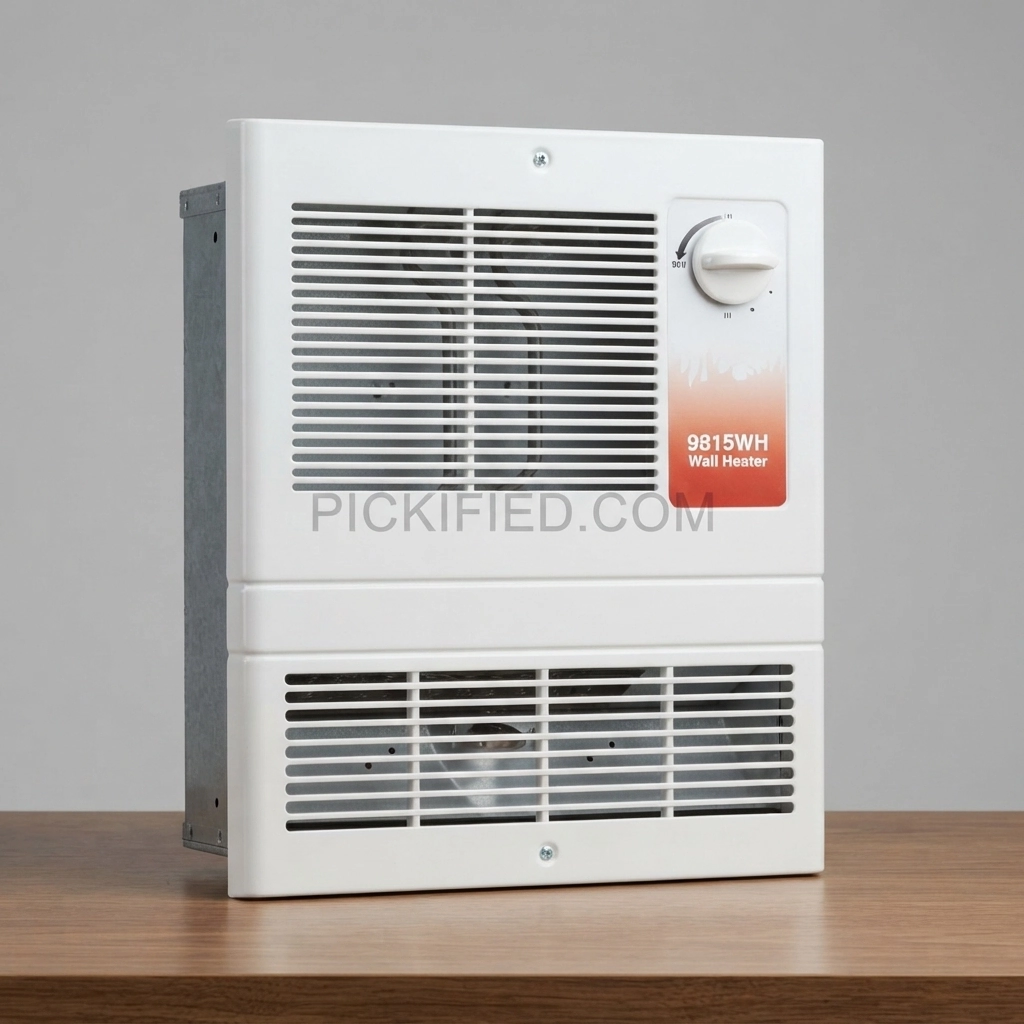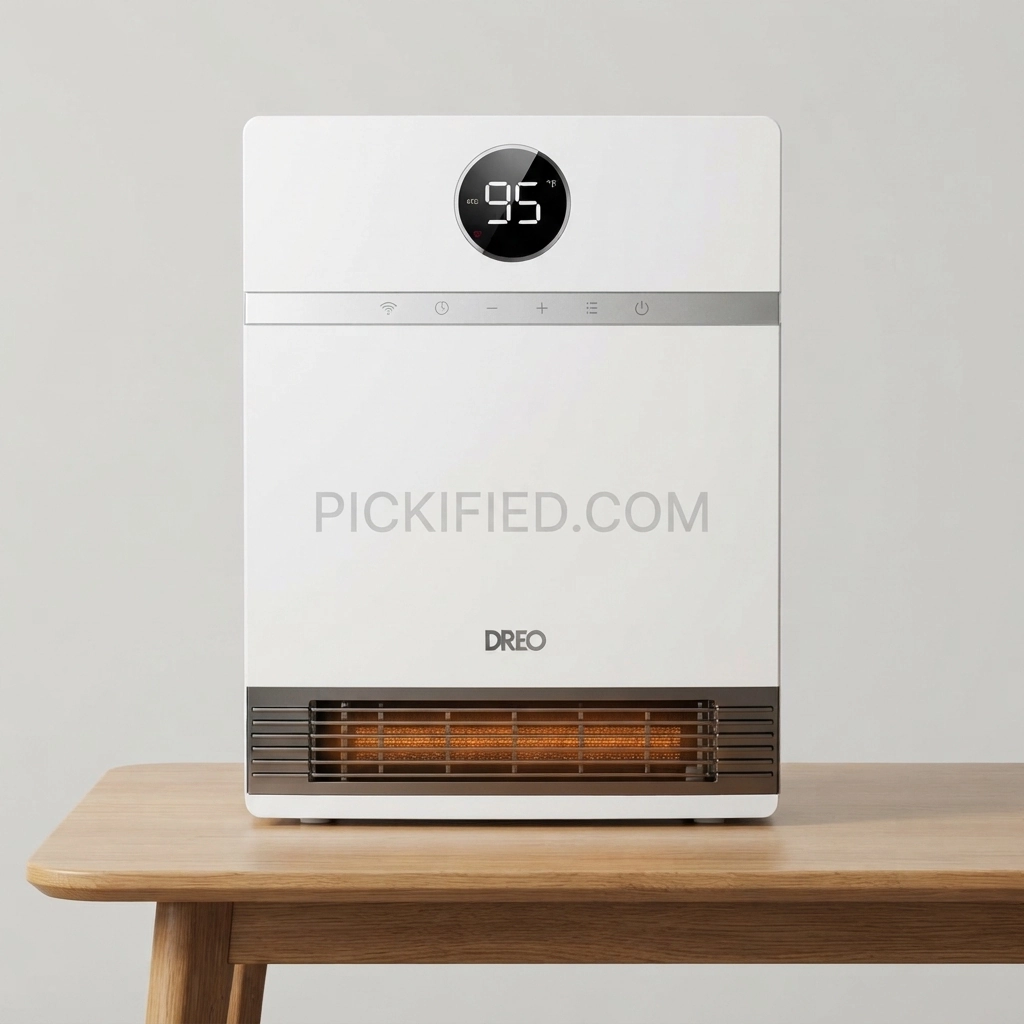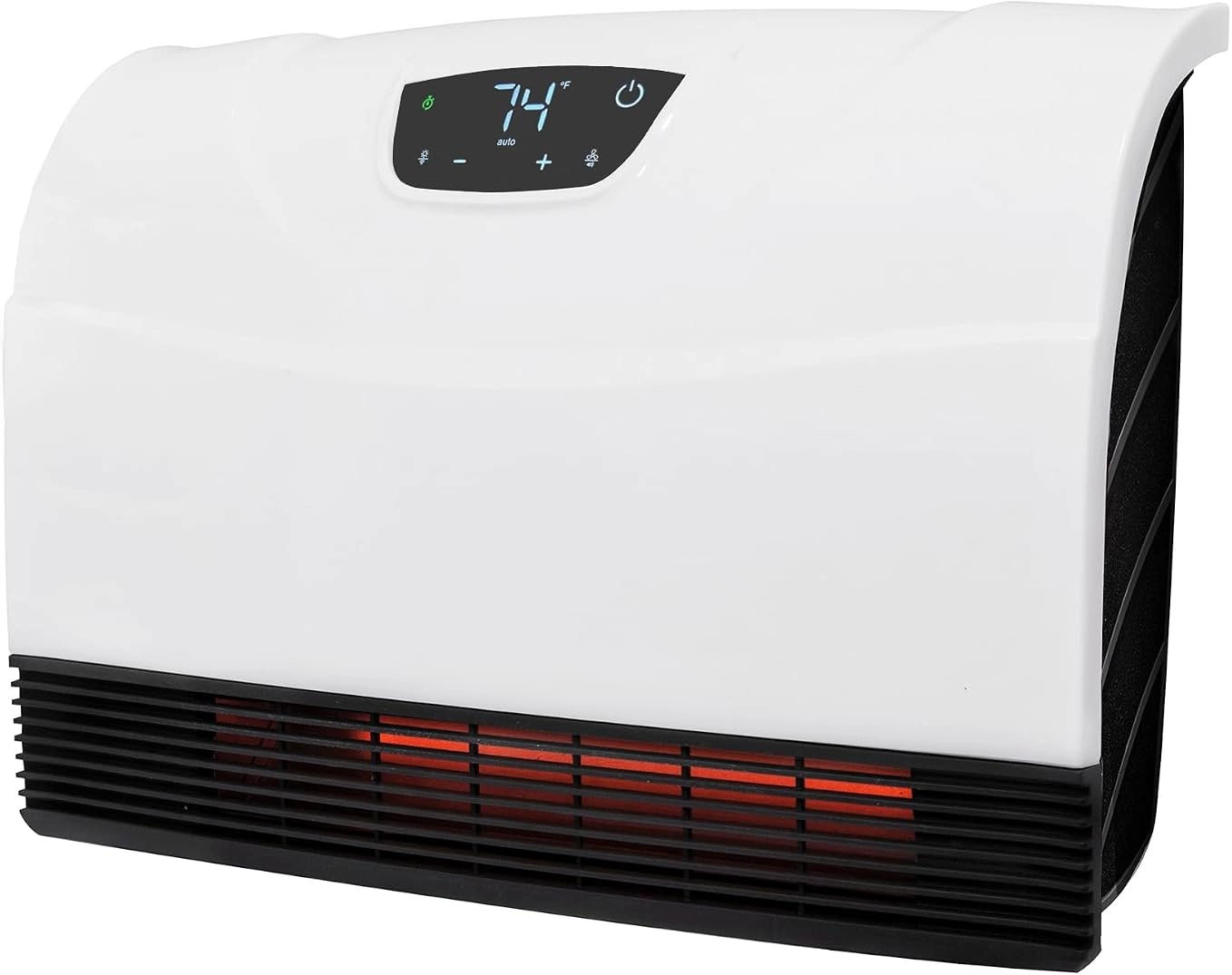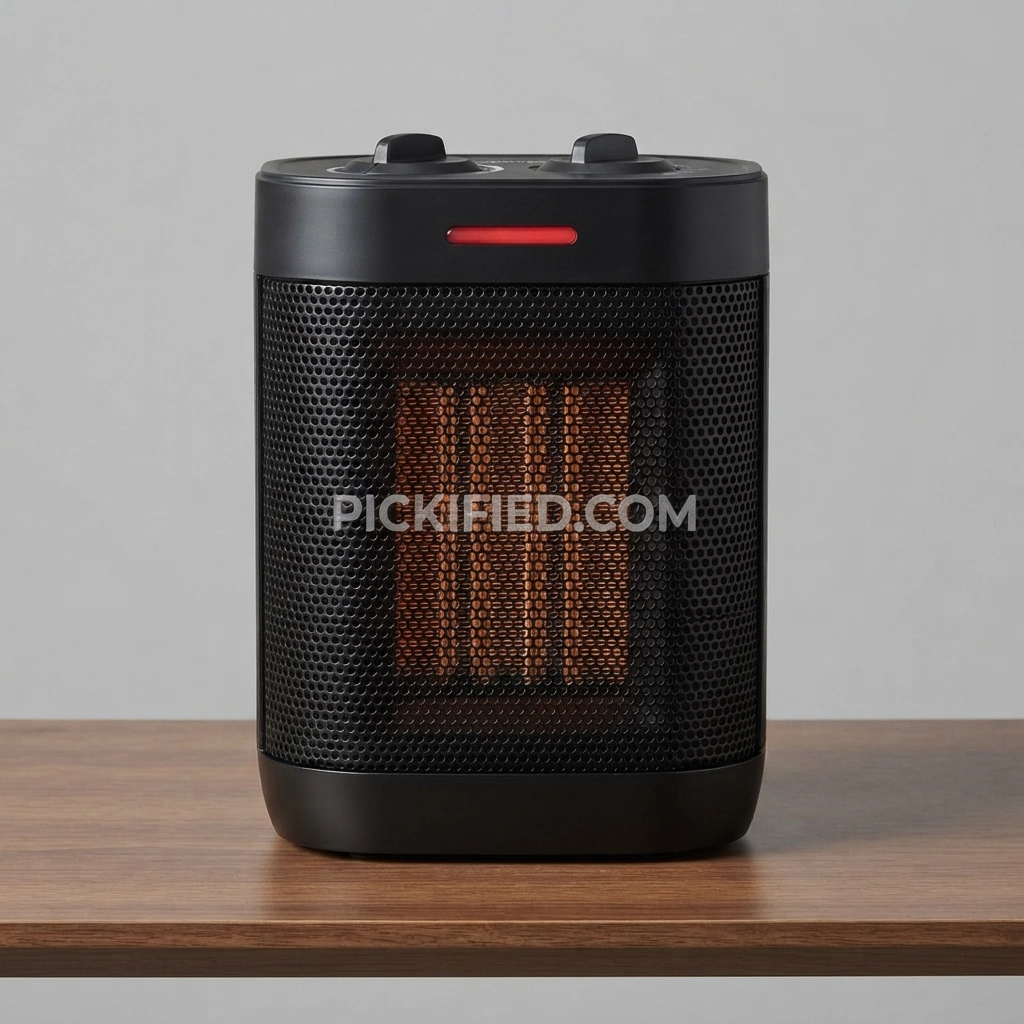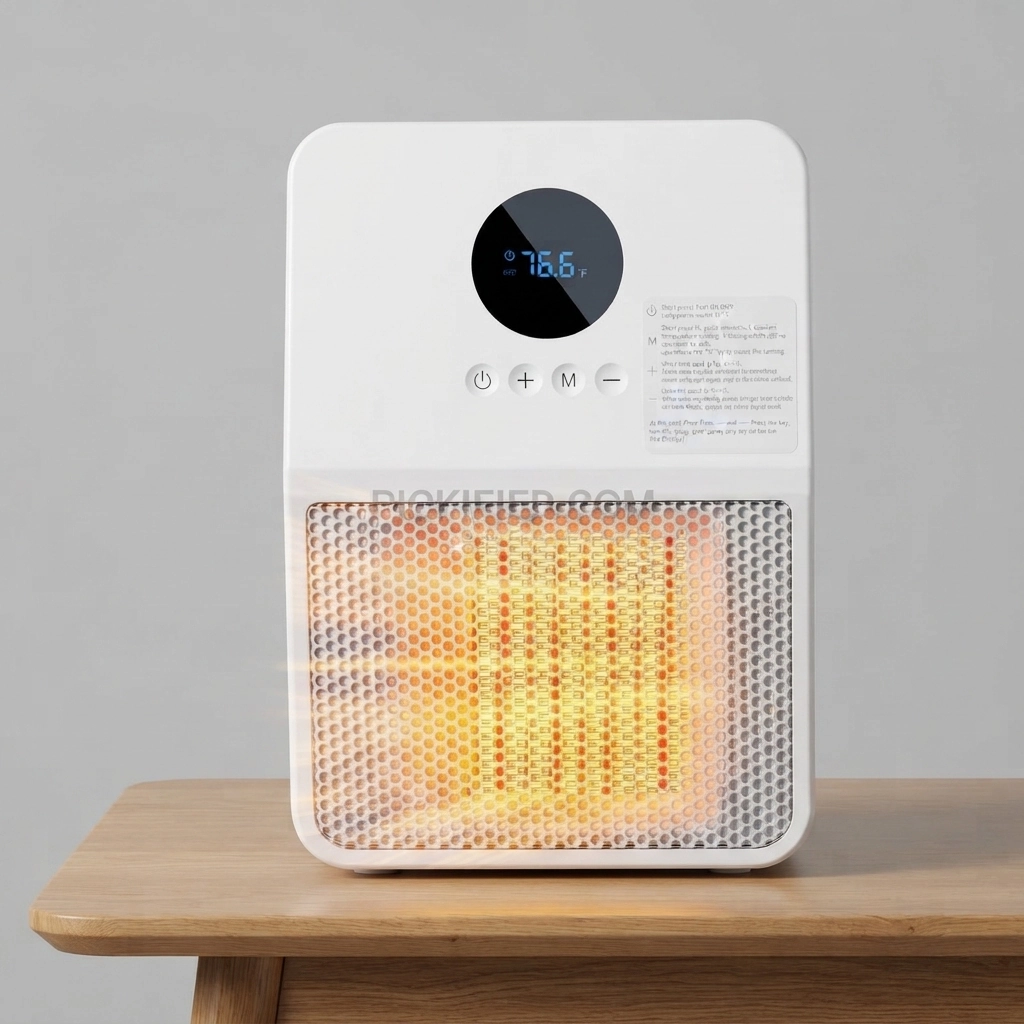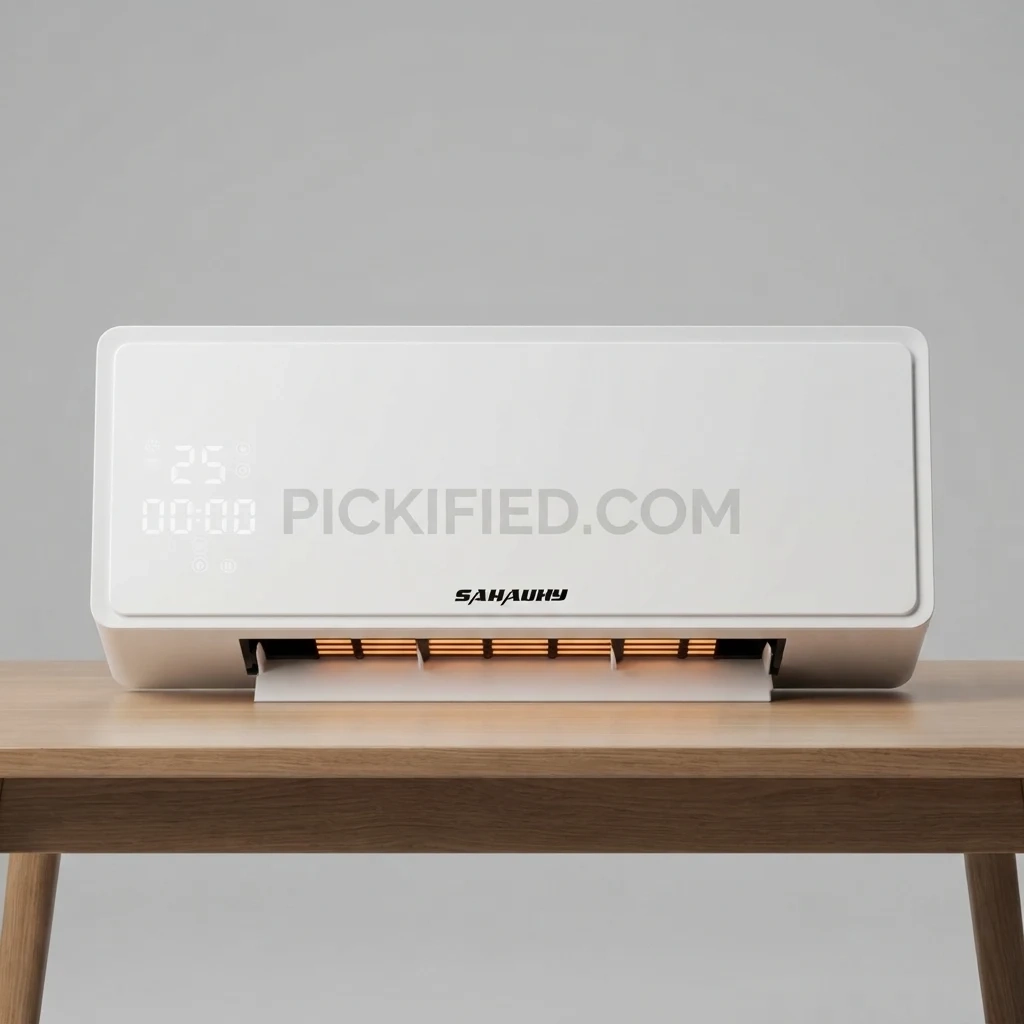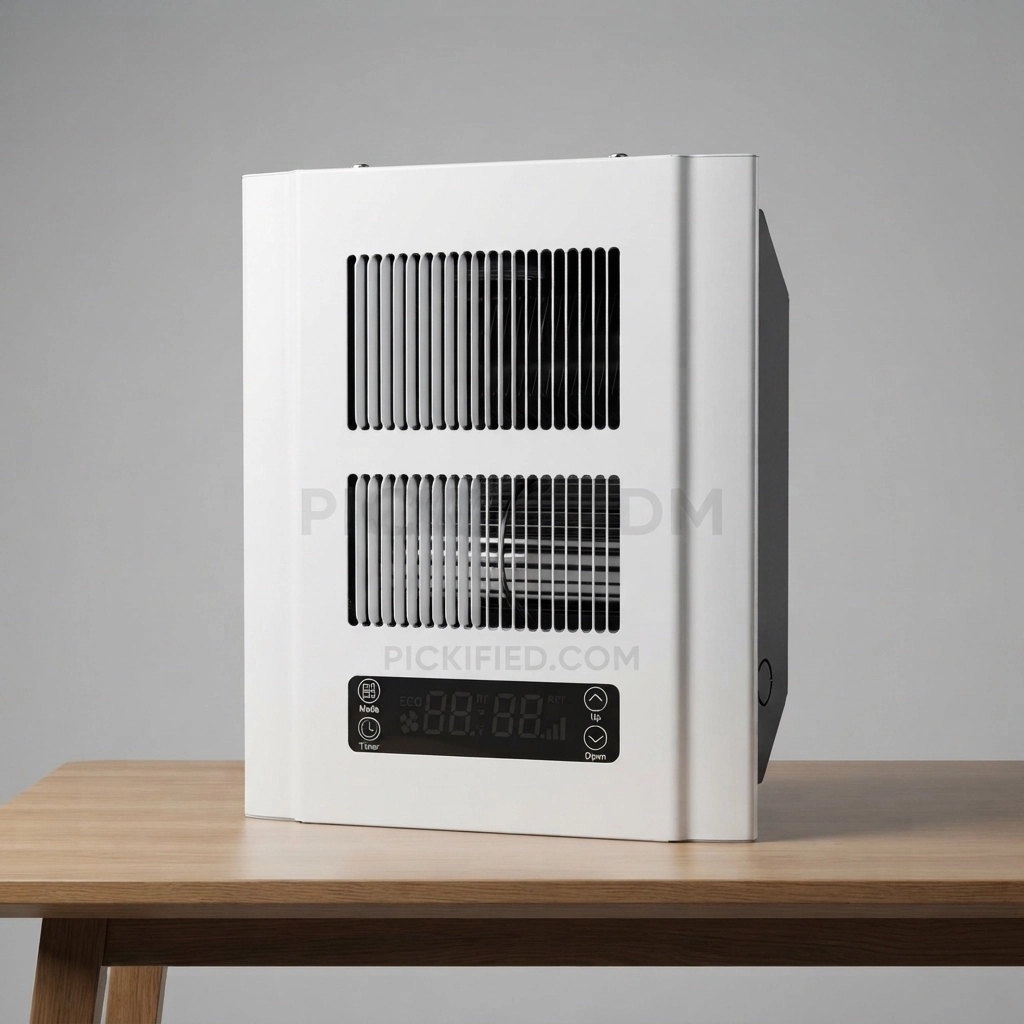


dreo smart wall heater wh719s
Best for: Bedrooms where automated scheduling, remote smartphone adjustments, and flexible low-power ECO operation are priorities.
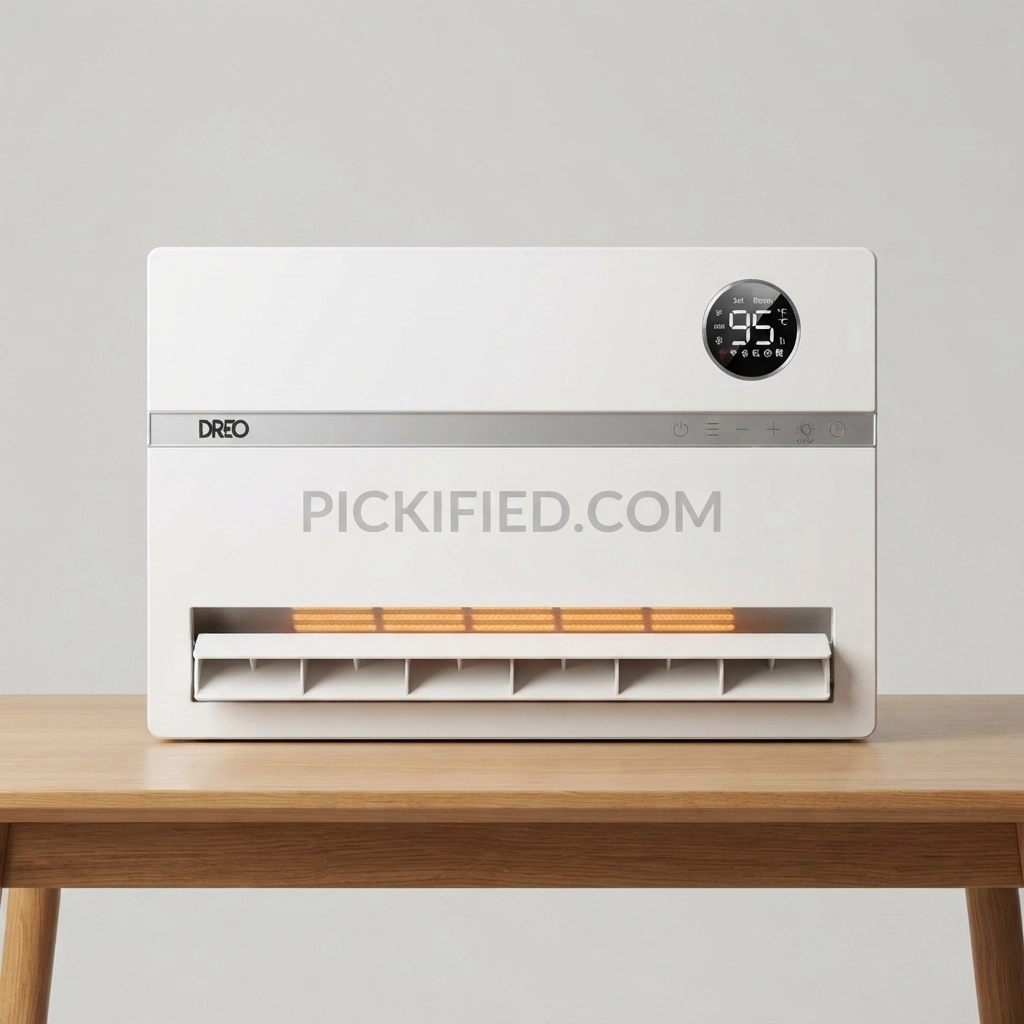
Key Specifications
- Heating Technology: PTC Ceramic with cross-flow blower
- Max Power Draw: 1500W (features variable low-wattage ECO mode)
- Voltage: 120V AC (Standard plug)
- Oscillation: 120° vertical louvers
- Thermostat Range: 41°F to 95°F (1°F increments)
- Control Options: Dreo App, Amazon Alexa, Google Assistant, digital remote
Overview & Testing Findings
The Dreo WH719S is a slim, surface-mount wall heater designed to sit cleanly above head height on bedroom drywall. Utilizing a wide PTC ceramic element and a 120-degree vertical oscillation vane, it directs warm air downward across the bed area rather than letting heat pool immediately near the ceiling.
Its ECO mode dynamically modulates heat output, stepping down the heating elements as the room nears its set temperature to avoid running at peak 1500W capacity continuously. At low output, the cross-flow fan remains smooth, and the LED display automatically dims to prevent ambient glare during sleep. For homeowners who like room temperatures adjusted before bedtime, the companion app allows detailed 24-hour programming.
Pros & Cons
What We Liked (Pros)
- Precise 1-degree thermostat calibration prevents nighttime temperature swings.
- Variable ECO mode drops active wattage consumption significantly once the bedroom is warmed.
- Display can be dimmed or turned off completely for pitch-black sleep environments.
- Hands-free voice and mobile control let you adjust the heat without leaving bed.
Drawbacks & Limitations (Cons)
- Surface-mounted design leaves the power cord visible running down to the wall outlet.
- App setup requires a stable 2.4 GHz Wi-Fi network.
Who Should Buy It?
Anyone wanting an easy-to-install, modern heater with smart capabilities and efficient multi-stage power modulation for small to medium-sized bedrooms.
Caution & Important Notes
Ensure the included mounting template is used to maintain at least 3 feet of clearance below the air discharge louver from headboards, pillows, or curtains.